Your park generates clean energy. Don't let the guarantees consume your capital.
The grid connection point guarantee and the decommissioning guarantee. A renewable project accumulates regulatory guarantees whose amount can represent millions tied up over the long term.
With the surety bond, those tied-up funds are freed. No Bank Risk Report. No tie-ins. Issued in 72 hours.
Issuance of the grid connection guarantee
impact on banking capacity or treasury
European countries covered
Years of service life covered

Connection points
In the field of renewable energy, companies must bear assembly and manufacturing expenses that raise the total cost needed to connect an installation to the grid; for this reason the Administration requires financial guarantees to carry out the projects, as a way of ensuring that the company has sufficient financial resources to develop them.
The Administration allows these financial guarantees to be submitted in the form of a surety bond that you can manage thanks to Sammy Free.
We highlight two types of guarantee:
- Connection point guarantees or grid connection guarantees
- Decommissioning guarantees

Guarantees / surety bonds for connection points
In order to have access and connection to the electricity transmission and distribution networks, a connection point guarantee or grid connection guarantee must be submitted to the Administration. This is a prerequisite for subsequently being able to request authorisation to exploit the distribution of energy.

Once the grid connection point has been built and the final operating authorisation has been obtained, the return of the guarantee may be requested.
The amount of the guarantee will depend on the power to be installed. The surety bond is one of the ways in which the company can submit connection point guarantees.

Decommissioning guarantee
These are guarantees that the Public Sector requires from companies that install photovoltaic solar plants or wind farms in order to guarantee the restoration of the land on which they are located once their use has ended. They are guarantees to ensure the decommissioning of the renewable energy installation so that the land returns to its initial state.
Want to grow by participating in European public tenders? Use our free search engine and access all calls in one place, with filters by sector, country, amount, date or contract type.
Which sectors use Surety Bonds?
Surety bonds are multi-sector instruments that can be used across all industries.
It is an alternative to the bank guarantee, offering greater advantages and enhanced flexibility.These are the sectors we commonly work with


Administrative Concessions
Guarantees for the management of long-term administrative concessions of public services.

Renewable Energy
Grid connection bonds and decommissioning guarantees for any renewable energy installation.
Mining
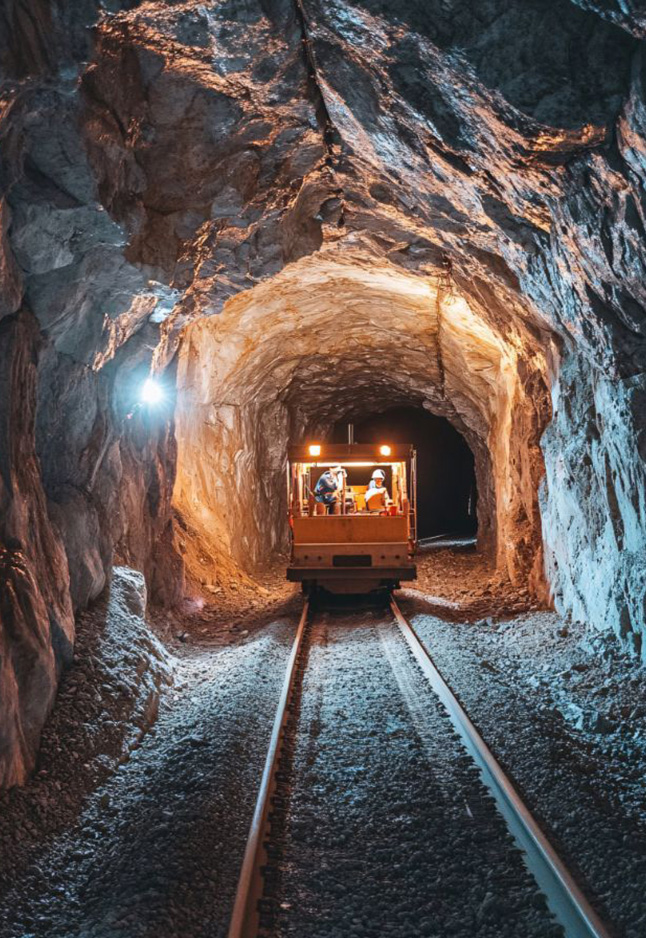
Environmental restoration, waste, exploitation and concession guarantees for mining operations.

Environment
Environmental restoration guarantees required by law.

Construction & Real Estate
Buyer deposit guarantees and decennial insurance.

Private Security
Guarantees required by national competent authorities without affecting banking exposure.

Customs & Import/Export
Guarantees on payment of tariffs and VAT before the Customs and Special Taxes Department.

Gambling
Administrative bonds for gaming licences.
Advantages: Surety bond
Your liquidity, intact
No financial resources are tied up. The money stays in your account doing what it should: financing your business.
Off the Bank Risk Report
The surety bond does not count as bank risk. Your rating and your financing capacity are not affected.
Response in 48-72h
We operate in 30 countries. A single signature for all your markets. We do not miss deadlines. When the specifications require 5 days, we deliver in 3. Study, response and issuance.
Coverage in 30 countries
A single relationship with Sammy Free covers you in any country of the European Economic Area. Without looking for a local broker every time.
Specialists, not generalists
We only do surety bonds. Not car insurance, not life, not home. Only surety bonds. This focus makes the difference.
Plafond: issue without waiting
With your pre-approved line you can issue new guarantees in a matter of hours. One analysis a year, unlimited tenders.
What documentation is required to apply for a surety bond?
The documentation required varies depending on the insurer and the type of operation, but generally includes information on the company’s financial, fiscal and legal situation, together with documentation related to the contract or tender (specifications, award notice, etc.).
How Much Does a Surety Bond Cost?
The cost of a surety bond depends on several factors that determine the level of risk involved:
- The company’s financial strength
- The type of bond required (bid bond, performance bond, advance payment bond, etc.)
- The amount and duration of the bond
- The company’s track record
- The country where the bond will be issued
- The company’s technical and operational capacity
- Market conditions
If you would like to learn more, read our article on the factors that influence surety bond pricing.
Can a surety bond replace a bank guarantee?
Yes. Both surety bonds and bank guarantees are valid instruments for securing a contract, and either can be used.
The key difference lies in the financial impact on your business:
- Bank guarantee: uses part of your banking capacity and ties up liquidity or assets as collateral.
- Surety bond: does not affect your banking capacity and does not tie up capital.
Discover all the advantages of surety bonds compared with traditional bank guarantees.
How long does it take to issue a surety bond?
It depends on whether you already have a Plafond (pre-approved bonding facility) in place with the insurer or not:
- With a Plafond line: issuance is same-day, as the company has already been assessed and approved.
- Without a Plafond line: the required documentation must be submitted (financial statements, legal documentation, tender documents, etc.). Once received, you will normally receive a quotation within 48 hours.
Do you also arrange guarantees between private companies?
Yes. Surety bonds can be used both in contracts required by public authorities and in agreements between private companies.
- With public authorities: they are required by law to accept a surety bond as a valid form of guarantee, unless the tender documents state otherwise.
- Between private companies: both parties must agree on the type of guarantee accepted. Both a surety bond and a bank guarantee are acceptable where there is mutual agreement.
What types of guarantees do you arrange?
We arrange all types of surety bonds. The most common are:
- Bid Bond: to participate in public tenders and procurement processes.
- Performance Bond: to guarantee performance of the contract once awarded.
- Advance Payment Bond: when a company receives an advance payment and must guarantee its repayment if contractual obligations are not met.
- Maintenance Bond: provides cover during a defined period after completion, ensuring that the works have been carried out correctly and covering potential defects in materials, workmanship or design that may arise at a later stage.
- Retention Bond: replaces amounts retained by the contracting authority until completion of the contract. It avoids the retention of funds from certified interim payments due to potential defects.
If your situation does not fit exactly into any of these categories, contact us with no obligation and we will find the most suitable solution for you.